Extraterrestrial LifeOctober 28, 2025
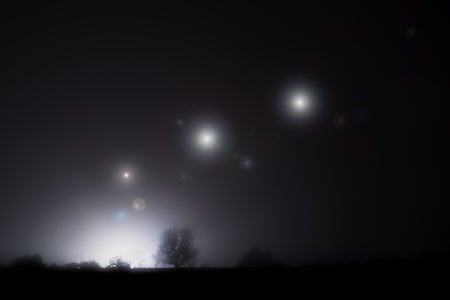
UFOs Are Just One Explanation for Mysterious Patterns in Old Telescope Data
New peer-reviewed research reporting strange lights in the pre-space-age sky is sparking curiosity and controversy
UFOs Are Just One Explanation for Mysterious Patterns in Old Telescope Data
New peer-reviewed research reporting strange lights in the pre-space-age sky is sparking curiosity and controversy
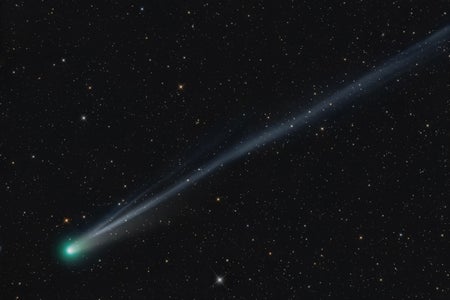
Why Do Some Comets Dazzle While Others Fizzle?
A comet’s brightness depends on how it’s made, how and when we see it, and even a bit of unpredictable luck

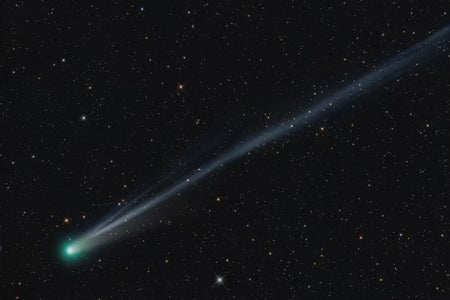
How to Catch a Rare Comet and a Meteor Shower
A comet visible to the naked eye will make its closest approach to Earth on October 21
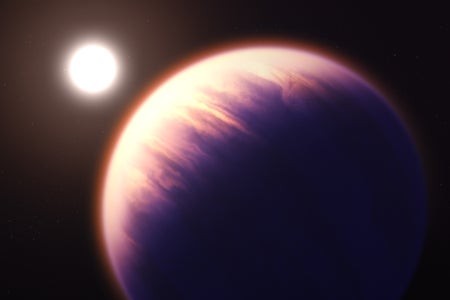
Have Astronomers Finally Found an Exomoon?
Data from the James Webb Space Telescope and other observatories suggests a supervolcanic exomoon may lurk around the giant exoplanet WASP-39b

Poem: ‘In Reality’
Science in meter and verse
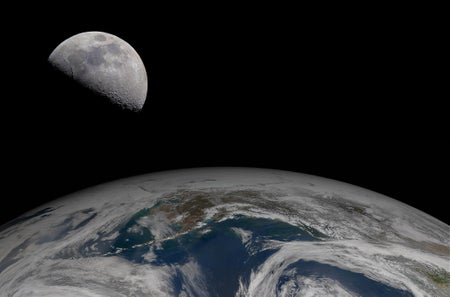
How to See the Earth and Moon from Mars
If you pick the right time, our home world and our moon could be easily visible from the Red Planet
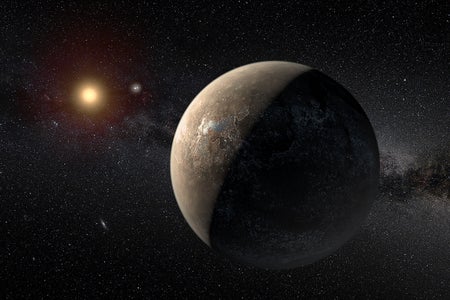
After 30 Years of Discovery, These Are Astronomers’ Top Five Exoplanetary Systems
Space scientists look back on three decades of exoplanet discoveries—from rows of massive ‘super-Earths‘ to worlds with perfectly synchronized orbits
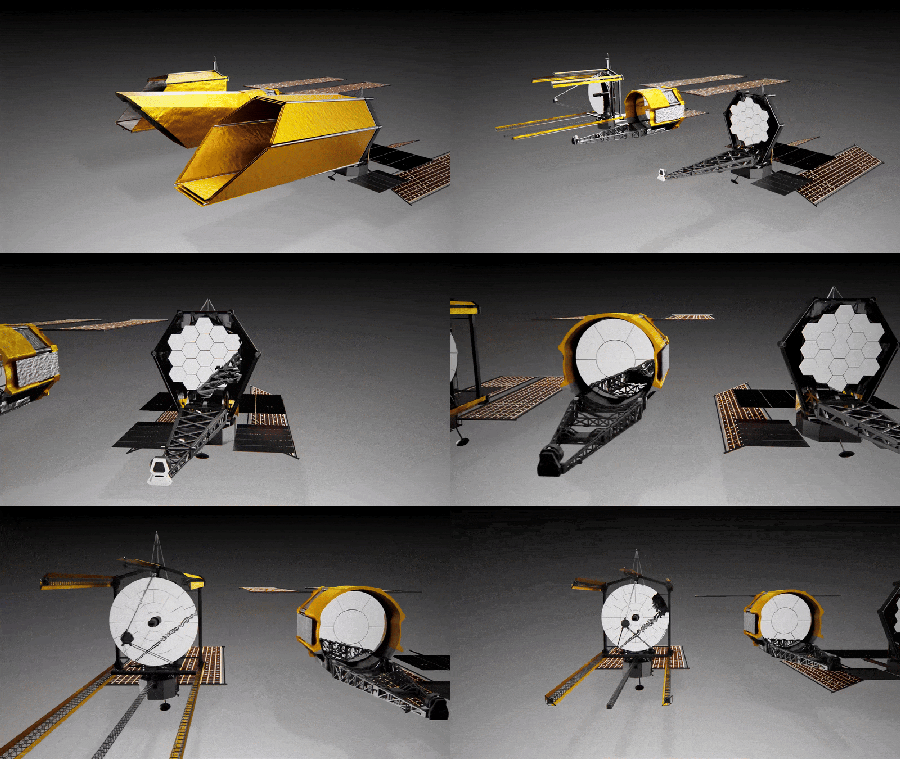
NASA’s First-Ever Alien-Hunting Space Telescope Could Enlighten Our New Dark Age
The Habitable Worlds Observatory is poised to tell us whether Earth-like planets are common—if it can get off the ground
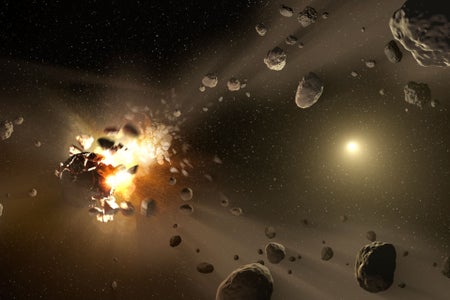
Asteroid ‘Families’ Reveal Hidden Histories and Impact Risks across the Solar System
Many asteroids are related, but their family trees can be hard to trace
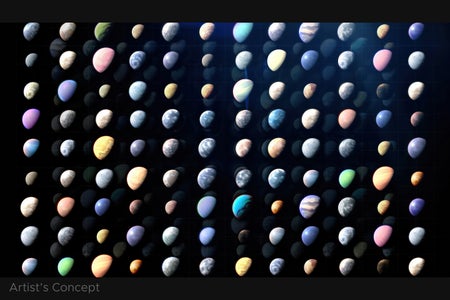
Astronomers’ Exoplanet Haul Tops 6,000 Alien Worlds
It’s a crowded galaxy, the latest exoplanet tally shows
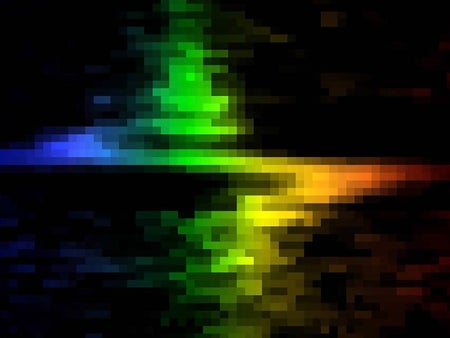
How Do You Weigh a Black Hole?
Gauging the mass of a black hole is tricky, but astronomers have devised multiple methods to measure the heft of these galactic gluttons
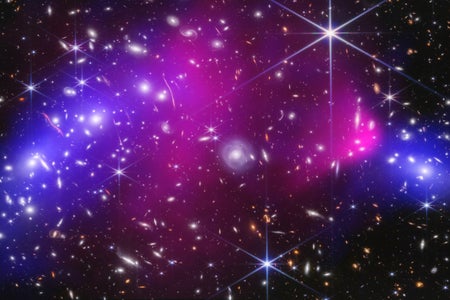
Mesmerizing New JWST Image Sharpens Our View of Dark Matter’s Intergalactic Playground
A swarm of galaxies called the Bullet Cluster is the biggest, best natural laboratory for studying dark matter that astronomers have ever seen