AstrophysicsMay 28, 2026
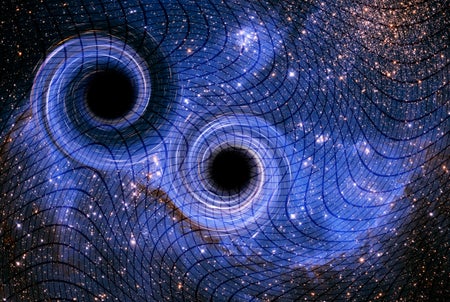
The ‘age of gravitational astronomy’ is here
A record-setting collection of precisely measured gravitational waves reveals new information about how black holes behave and evolve
The ‘age of gravitational astronomy’ is here
A record-setting collection of precisely measured gravitational waves reveals new information about how black holes behave and evolve
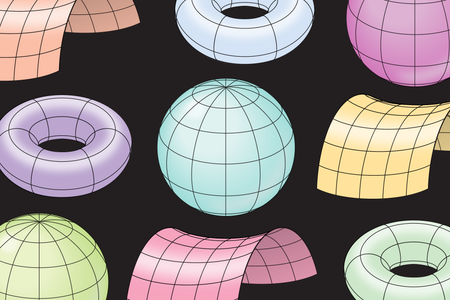
The universe could have 18 possible shapes
Our universe appears flat—but this observation still leaves plenty of options for its true shape. In fact, our cosmos could resemble a donut

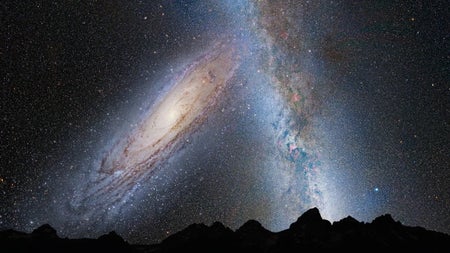
What happens when galaxies collide?
Our galaxy and its nearest large companion, Andromeda, may be headed for a collision on a cosmic scale. What happens then?

Are astronomers ignoring some of the cosmos?
There are parts of the universe, and of the electromagnetic spectrum, that we’re not covering with our telescopes—but not as many as you might think!
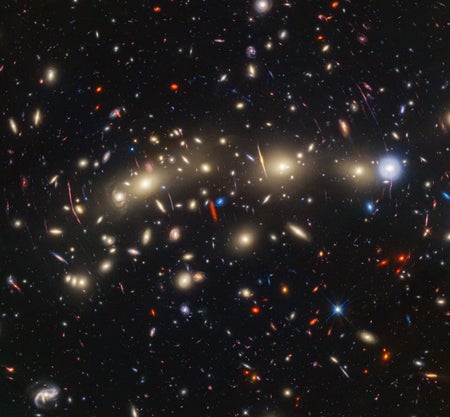
This baby galaxy is a ‘missing link’ in the quest to glimpse the universe’s first stars
Seen just 800 million years after the big bang, an object called LAP1-B is a galactic building block that seems to hold some of the first stars to ever shine
‘Touchy-feely’ dark matter is having a moment
Models giving dark matter more complex behavior could help solve multiple cosmic mysteries
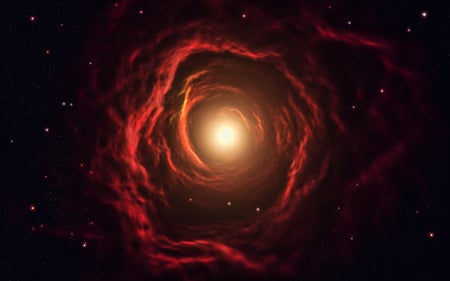
Astronomers puzzle over early origins of mysterious ‘red monster’ galaxy
Researchers are perplexed by a galaxy that seems too large and too dusty for its place in cosmic history, less than a half-billion years after the big bang
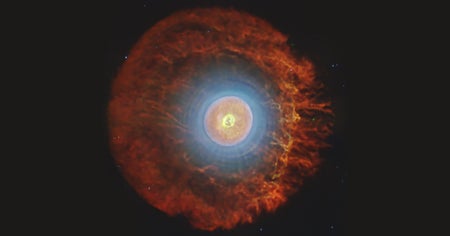
Buckyballs and a cosmic question mark stun in new JWST imagery of a planetary nebula
New James Webb Space Telescope images could shed fresh light on how dying stars evolve over time

Death by primordial black hole is hard to come by
Subatomic black holes from ancient cosmic history could, in principle, make you have a very bad day. But chances are you’ll never encounter one

NASA’s Roman Space Telescope will begin its revolutionary mission in September
Ahead of schedule and under budget, the Nancy Grace Roman Space Telescope will launch in early September. The mission aims to map the universe in unprecedented detail
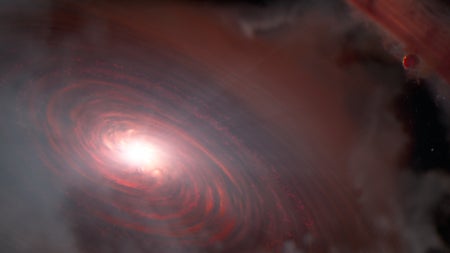
The solar system’s first solids formed in a rush
Rather than slowly condensing over millions of years, the first building blocks of Earth and other planets may have formed rapidly in a chaotic disk at the dawn of the solar system
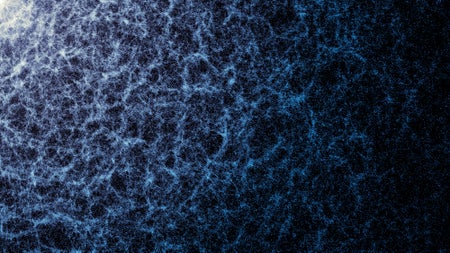
Behold! This is the largest, sharpest 3D map of the universe yet
A new map of the cosmos, including more than 47 million galaxies and other cosmic objects, represents one of the most extensive surveys of our universe ever conducted