
The SciencesSeptember 13, 2007
Traveler's Dilemma and a new kind of formal reasoning in game theory
Traveler's Dilemma and a new kind of formal reasoning in game theory
Shamans of Small
Like interstellar travel, time machines and cyberspace, nanotechnology has become one of the core plot devices on which science-fiction writers draw
Many worlds in Oxford
Slideshow: Do-It-Yourself Quantum Eraser
This slideshow is part of a package that supplements our story on quantum erasure in the May issue of Scientific American

Kim's Big Fizzle
The Physics Behind A Nuclear Dud
Chicken-Wire Electronics
Carbon structures provide new devices and remarkable physics
The Next Generation
New superconducting wires come closer to market
A Hint of Axions
An experiment may have seen an elusive new particle
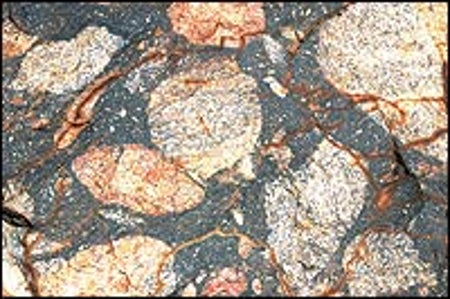
Chaos in the Crater
Welcome to Vredefort, a real Bermuda Triangle
Computing with Quantum Knots
A machine based on bizarre particles called anyons that represents a calculation as a set of braids in spacetime might be a shortcut to practical quantum computation
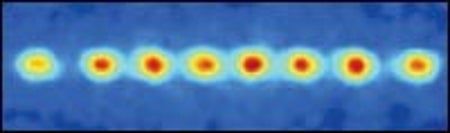
Ion Power
Atomic ions prove their quantum versatility
Cheaper Dots
New process slashes the cost of quantum dots
A Future in Plastics
The march toward less expensive, more flexible electronics continues
Quantum Bug
Qubits might spontaneously decay in seconds
Making Cold Antimatter
Low-energy atoms of antihydrogen will enable researchers to test a fundamental property of the universe
CT Scan for Molecules
Producing 3-d images of electron orbitals
A Glimpse of Supersolid
Solid helium can behave like a superfluid
Back to the Future
Physicists gaze into the crystal ball
Hawking a Theory
Is the black hole information paradox solved?
Next Stretch for Plastic Electronics
Organic semiconductor devices can make more than just bendable displays. They will find use in wearable electronics, chemical sensors, skin for robots and innumerable other applications
Magnetic Soot
Magnetic nanofoam is found to be ferromagnetic
The Shapes of Space
A Russian mathematician has proved the century-old Poincaré conjecture and completed the catalogue of three-dimensional spaces. He might earn a $1-million prize
Henri Poincar¿, His Conjecture, Copacabana and Higher Dimensions
High-Temp Knockout
Gone: two possible superconducting "glues"