WeatherMay 1, 2016
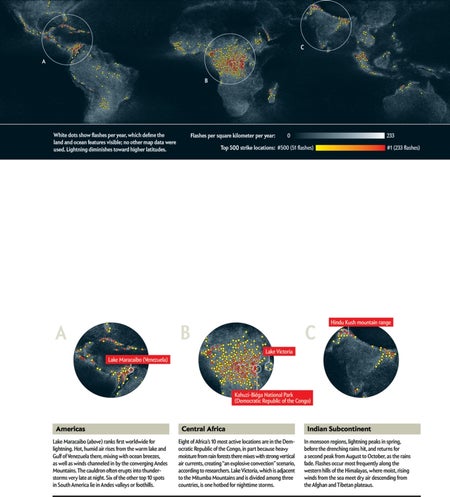
The World's Top Lightning Hotspot Is Lake Maracaibo in Venezuela
Central Africa is the epicenter, but a South American lake ranks number one
Mark Fischetti was a senior editor at Scientific American for nearly 20 years and covered sustainability issues, including climate, environment, energy, and more. He assigned and edited feature articles and news by journalists and scientists and also wrote in those formats. He was founding managing editor of two spin-off magazines: Scientific American Mind and Scientific American Earth 3.0. His 2001 article “Drowning New Orleans” predicted the widespread disaster that a storm like Hurricane Katrina would impose on the city. Fischetti has written as a freelancer for the New York Times, Sports Illustrated, Smithsonian and many other outlets. He co-authored the book Weaving the Web with Tim Berners-Lee, inventor of the World Wide Web, which tells the real story of how the Web was created. He also co-authored The New Killer Diseases with microbiologist Elinor Levy. Fischetti has a physics degree and has twice served as Attaway Fellow in Civic Culture at Centenary College of Louisiana, which awarded him an honorary doctorate. In 2021 he received the American Geophysical Union’s Robert C. Cowen Award for Sustained Achievement in Science Journalism. He has appeared on NBC’s Meet the Press, CNN, the History Channel, NPR News and many radio stations.
The World's Top Lightning Hotspot Is Lake Maracaibo in Venezuela
Central Africa is the epicenter, but a South American lake ranks number one
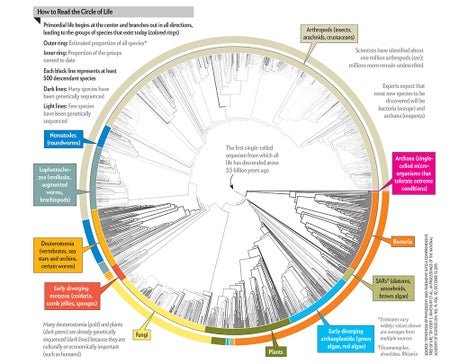
All 2.3 Million Species Are Mapped into a Single Circle of Life
Lineages of all known species on Earth are finally pieced together

From AI to Zika: AAAS Conference Highlights
Scientific American editors Mark Fischetti, Dina Maron and Seth Fletcher talk about the info they picked up at the just-concluded annual meeting of the American Association for the Advancement of Science in Washington, D.C. Subjects covered include gravitational waves, whether there's really a war on science, the growing concern over Zika virus, sea level rise and advances in artificial intelligence.
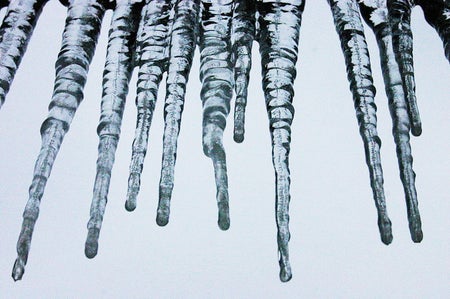
What Is This Polar Vortex That Is Freezing the U.S.?
Why frigid air, normally bottled up at the North Pole, sometimes pours down as far south as Florida
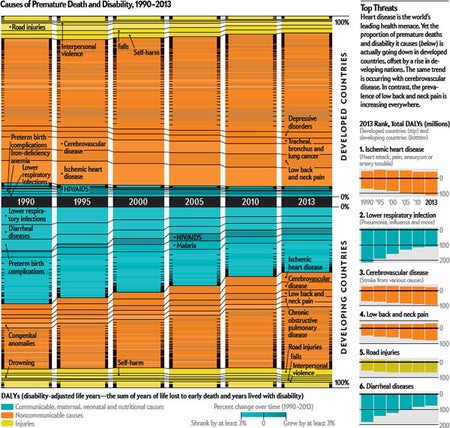
Developing Countries Are Battling Diseases of the Rich and Poor
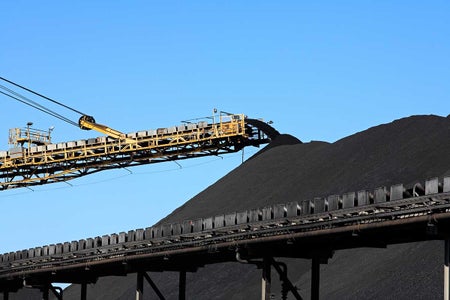
U.S. Coal Production Hits 30-Year Low
After a high in 2008 output, exports have plummeted
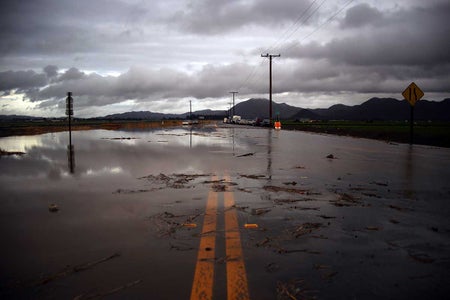
Ask the Experts: Is El Niño to Blame for So Much Weird Weather?
Winter heat, pounding rains, tornadoes—a climatologist explains which extremes can be attributed to El Niño and which cannot
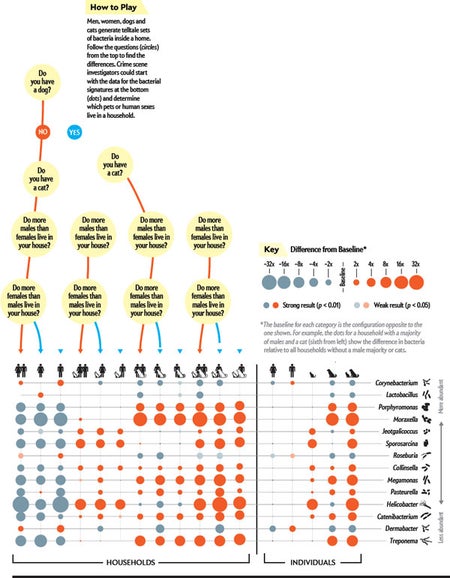
Men and Women Alter a Home's Bacteria Differently
An analysis of dust reveals how the presence of men, women, dogs and cats affects the variety of bacteria in a household
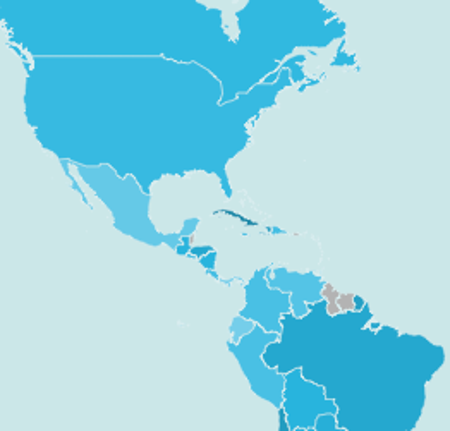
139 Countries Could Get All of their Power from Renewable Sources
Energy from wind, water and sun would eliminate nuclear and fossil fuels

Meet PlankZooka, the Deep-Sea Plankton Vacuum
The new sampler sucks up the tiny creatures without tearing them apart
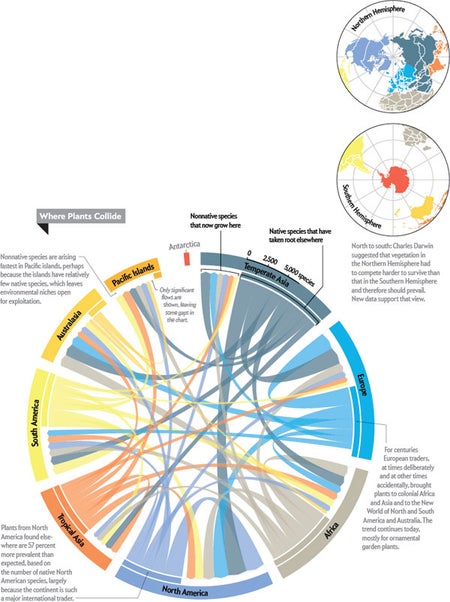
Invasive Plants Are Moving from the Northern Hemisphere South
Intrusive plants tend to originate in the Northern Hemisphere

Hurricane Patricia Rapidly Becomes Strongest Storm Ever in Western Hemisphere
Top wind speed is much greater than Hurricanes Katrina or Sandy
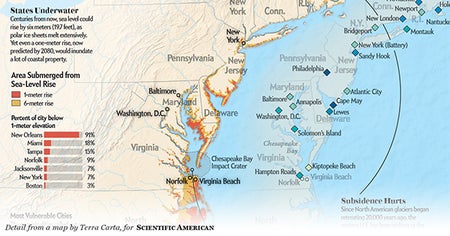
The East Coast Is Extremely Vulnerable to Hurricane Flooding
Our map shows low-lying at-risk cities and coastlines everywhere, many of them sinking
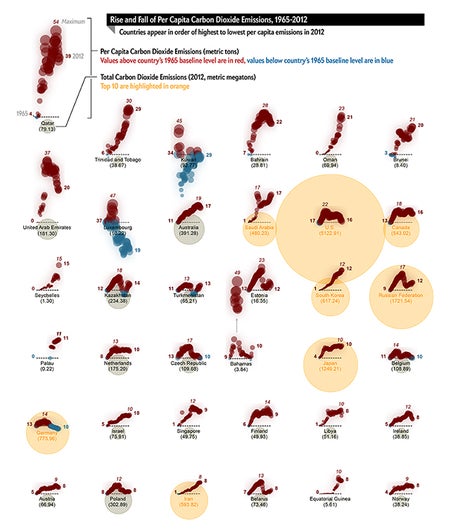
CO2 Emissions Shrink, in a Few Cases
A handful of countries are actually lowering their emissions per person
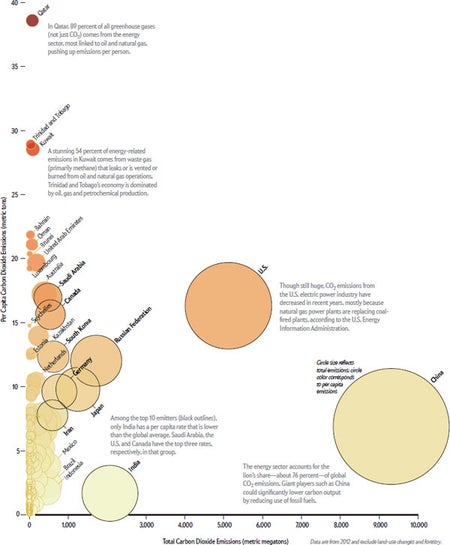
China and the U.S. Are Not the Biggest Carbon Emitters on a Per-Person Basis
Per capita, the world's greatest carbon emitters are small countries
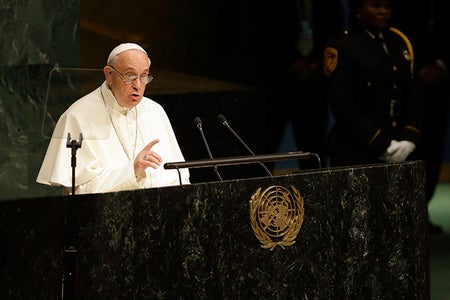
Pope Says Science Can Solve "Serious Problems Besetting Mankind"
Calls on world leaders to respect the "right of the environment"
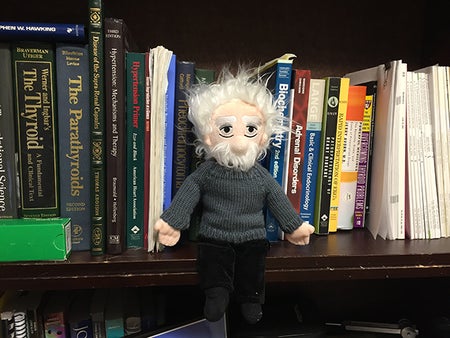
Einstein in the Wild: We Found Him [Slide Show]
Readers across the globe sent us photos of the rock star scientist

QUIZ: How Well Do You Know Einstein?
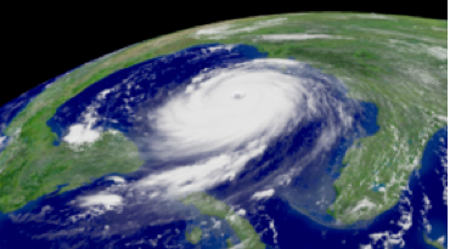
Is New Orleans Safer Today Than When Katrina Hit 10 Years Ago?
People inside the city walls are more protected against flooding, for now, but residents outside the city are not
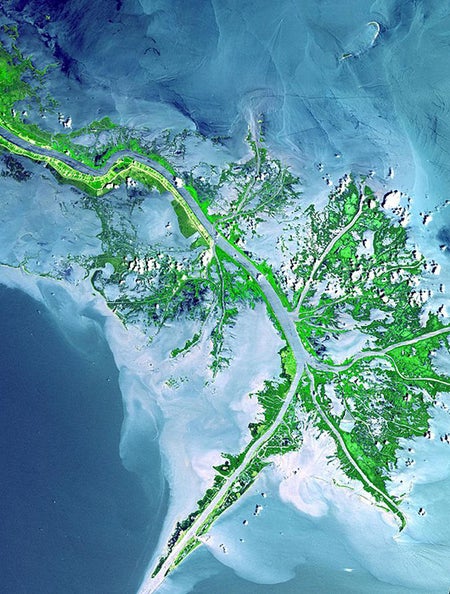
Mississippi River Mouth Must Be Abandoned to Save New Orleans from Next Hurricane Katrina
Three nationwide design teams reveal realistic plans to massively rebuild the disintegrating delta

Einstein in the Wild: Have You Seen Him?
Send us photos in honor of the 100th anniversary of general relativity

Little Creatures of the Deep [Slide Show]
A new robot successfully traps the larvae of exotic species living in the extremely deep ocean

Search Engine Plants Trees as It Finds Your Info
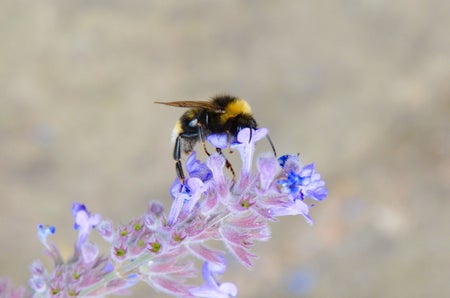
Heat Puts the Squeeze on Bees
As climate warms, bumble bees leave southern locations but do not venture north