
ComputingNovember 10, 2020
Virtual Patients Could Revolutionize Medicine
Replacing humans with digital simulations could make clinical trials faster and safer
Virtual Patients Could Revolutionize Medicine
Replacing humans with digital simulations could make clinical trials faster and safer

Quantum Sensors Could Let Autonomous Cars ‘See’ around Corners
High-precision metrology based on the peculiarities of the subatomic world


Spatial Computing Could Be the Next Big Thing
Beyond virtual and augmented reality

How to Preserve the Privacy of Your Genomic Data
A technology called “fully homomorphic encryption” is so secure that even future quantum computers won’t be able to crack it
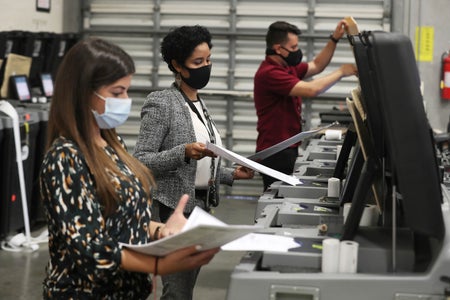
An Expert on Voting Machines Explains How They Work
Election officials also rely on high-speed scanners, envelope openers and good old-fashioned paper

Social Media Restrictions Cannot Keep Up with Hidden Codes and Symbols
Much like spoken language, Internet memes take on shifting political meanings according to context

A Sustainable Alternative to Blanket Lockdowns
Instead of shutting down whole cities, we can use big data to take a more targeted approach
Trolling for Truth on Social Media
What 1990s Internet protest movements share with today’s disinformation campaigns

How Speech-Recognition Software Discriminates against Minority Voices
Until programmers recognize their own internal biases, the software they create will be problematic
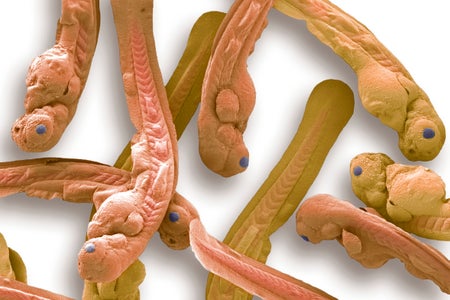
Fruit Flies Plug into the Matrix
A new budget-friendly virtual-reality system helps researchers study the brains of small animals
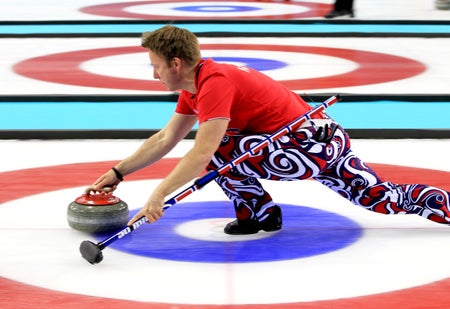
Watch a Robot AI Beat World-Class Curling Competitors
Artificial intelligence still needs to bridge the “sim-to-real” gap. Deep-learning techniques that are all the rage in AI log superlative performances in mastering cerebral games, including chess and Go, both of which can be played on a computer. But translating simulations to the physical world remains a bigger challenge.
A robot named Curly that uses “deep reinforcement learning”—making improvements as it corrects its own errors—came out on top in three of four games against top-ranked human opponents from South Korean teams thatincluded a women’s team and a reserve squad for the national wheelchair team. (No brooms were used).
One crucial finding was that the AI system demonstrated its ability to adapt to changing ice conditions. “These results indicate that the gap between physics-based simulators and the real world can be narrowed,” the joint South Korean-German research team wrote in Science Robotics on September 23.

The Quantum Butterfly Noneffect
A familiar concept from chaos theory turns out to work differently in the quantum world